Ethics, bias, and equity in omics AI

Ethics, Bias, and Equity in Omics AI

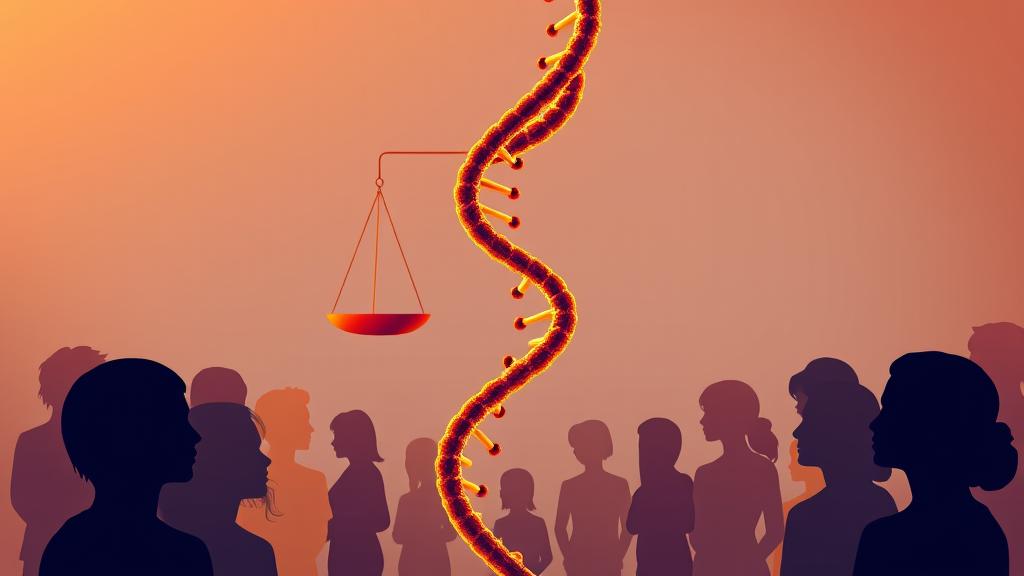
Introduction: The Promise and the Peril Precision medicine promised to treat each patient as an individual — to move beyond one-size-fits-all therapies to interventions tailored to your unique biology. AI-driven omics seemed poised to accelerate this vision: algorithms that could read your genome, interpret your proteome, and predict your disease risk with unprecedented accuracy. But there’s a problem. The data powering these algorithms is profoundly unrepresentative of human diversity. As of 2024, over 94% of participants in genome-wide association studies (GWAS) are of European ancestry, despite Europeans comprising only about 16% of the global population. This imbalance isn’t just a statistical curiosity — it has real consequences. Polygenic risk scores trained on European data perform significantly worse for individuals of African, Asian, Hispanic, and Indigenous ancestry. Variant classification algorithms misclassify pathogenic mutations in underrepresented populations. And the AI tools now entering clinical practice risk cementing these disparities into healthcare systems worldwide. ...
March 16, 2026 · 67 AI Lab
Clinical translation of omics AI to patient outcomes

Clinical Translation: From Omics AI to Patient Outcomes

The Ultimate Test: Does It Help Patients? After eighteen posts exploring the technical landscape of agentic omics—from foundation models for DNA and proteins to multi-agent systems for drug discovery—we arrive at the question that matters most: does any of this actually improve patient outcomes? The answer is more nuanced than the hype suggests. As of early 2026, the FDA has approved over 1,000 AI/ML-enabled medical devices, but only a small fraction operate on genomic or pathology data with demonstrated clinical utility (IntuitionLabs, 2025; Nature Digital Medicine, 2025). The gap between a model that achieves 95% accuracy on a benchmark and a tool that measurably extends survival remains wide—and crossing it requires navigating regulatory pathways, clinical validation studies, and the messy reality of healthcare IT infrastructure. ...

March 15, 2026 · 67 AI Lab
AI agents analyzing cancer genomics data

Agents for Cancer Genomics: Toward Autonomous Precision Oncology

Introduction: The Precision Oncology Imperative Cancer is not one disease but hundreds—each with distinct molecular drivers, treatment responses, and clinical trajectories. The promise of precision oncology is simple in concept but staggering in execution: match the right treatment to the right patient at the right time, guided by the molecular profile of their tumor. In practice, this requires orchestrating a complex workflow: tumor sequencing to identify mutations, interpretation of those variants against clinical databases, integration of genomic data with transcriptomic and proteomic profiles, therapy matching against drug databases, clinical trial matching, and longitudinal monitoring for resistance and recurrence. Each step generates data, requires expert interpretation, and carries uncertainty. ...

March 13, 2026 · 67 AI Lab
Multi-omics data integration visualization

Multi-Omics Integration: The Whole Is Greater Than the Sum

Multi-Omics Integration: The Whole Is Greater Than the Sum Biological systems are fundamentally multi-layered. The flow of information—from DNA (genomics) to RNA (transcriptomics) to proteins (proteomics) to metabolites (metabolomics)—does not exist in isolation. Yet, for decades, bioinformatics has largely treated these “omics” layers as separate silos. Today, artificial intelligence is breaking down these walls. In this post, we explore how AI-driven multi-omics integration is transforming precision medicine and systems biology, shifting the focus from individual modalities to the interconnected entirety of the cell. ...

March 6, 2026 · 67 AI Lab