
US Stocks Tumbled on a Hot Jobs Report and Rising Yields
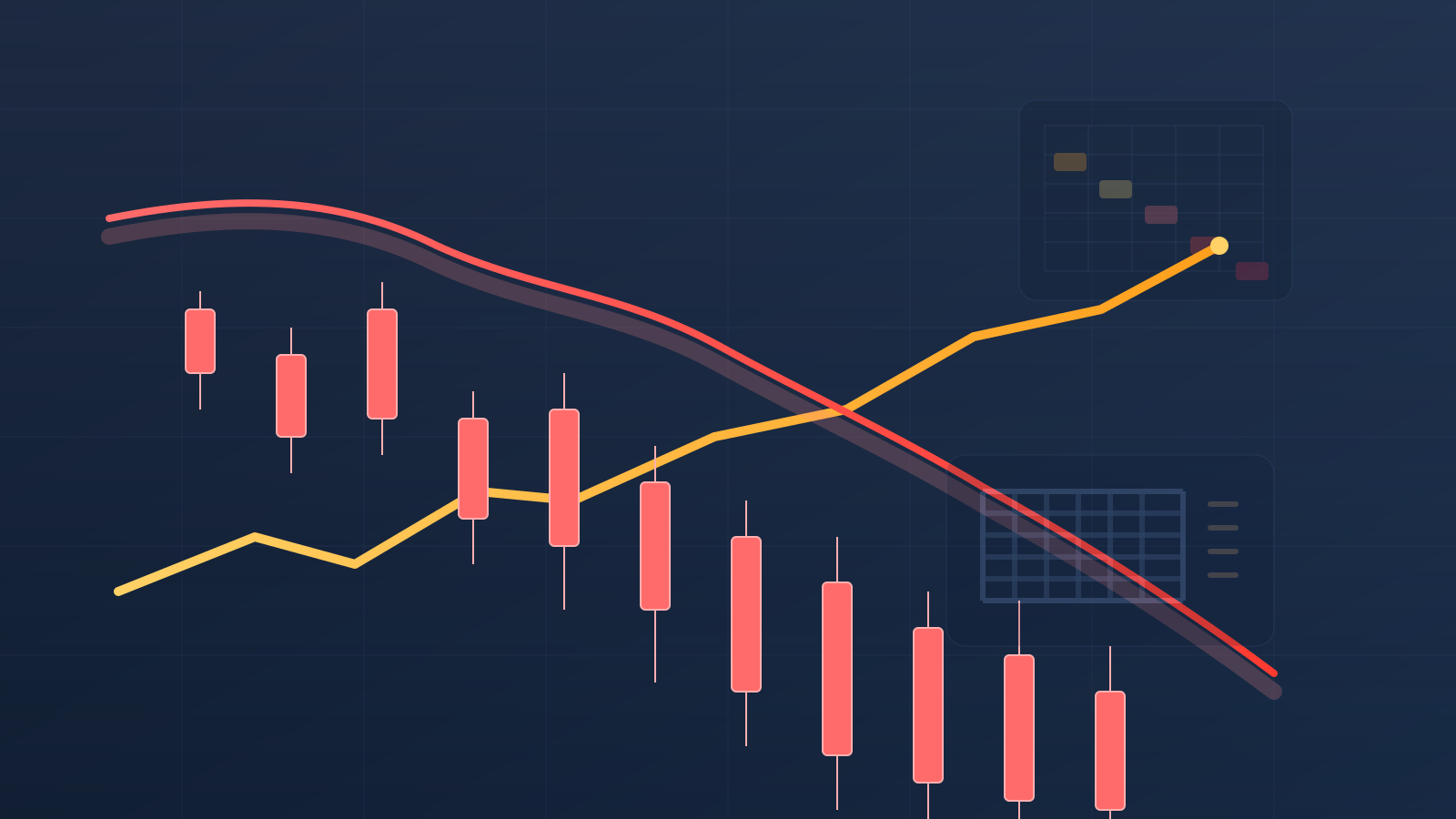
US stocks took a sharp step lower on June 5, and the pattern of the decline mattered as much as the size of it.
This was not a generic growth scare or a broad economic panic. The clearest trigger was a stronger-than-expected May employment report, which pushed Treasury yields higher and forced investors to reprice how quickly the Federal Reserve might be able to ease. The damage showed up most clearly in high-multiple growth stocks and semiconductors.
What Happened at the Close
According to Reuters and CNBC market-close coverage, the major indexes finished the day at:
- Nasdaq Composite: 25,709.43, down 4.18%
- S&P 500: 7,383.74, down 2.64%
- Dow Jones Industrial Average: 50,866.78, down 695.15 points, or 1.35%
The Nasdaq’s drop was especially notable. CNBC described it as the index’s worst day since April 2025. CNBC also reported that the S&P 500 finished its first negative week in 10 weeks after losing more than 2% over the week.
That split between the Nasdaq and the Dow is a useful clue. It suggests the market was punishing duration-heavy, valuation-sensitive parts of the tape much more than everything else.
The Catalyst: A Hotter Jobs Report
The May Employment Situation report from the U.S. Bureau of Labor Statistics came in stronger than many investors expected:
- Nonfarm payrolls: +172,000
- Unemployment rate: 4.3%
- Average hourly earnings: +0.3% month over month, +3.4% year over year
BLS also revised March and April payrolls higher by a combined 93,000 jobs.
That matters because a labor market that still looks firm makes it harder for investors to assume rapid Fed easing. Good economic news can become bad market news when valuations are high and rate-cut hopes are doing part of the lifting.
Treasury Yields Repriced Higher
The U.S. Treasury’s daily yield curve for June 5 showed a clear upward pressure point in intermediate and long maturities:
- 2-year: 4.17%
- 5-year: 4.29%
- 10-year: 4.55%
- 30-year: 5.01%
That 10-year yield matters most for equity valuation. When it rises quickly, the present value of future cash flows falls, and that tends to hit expensive growth stocks first.
In other words, the market was not just reacting to jobs data in isolation. It was reacting to what that data implied for discount rates.
Why Semiconductors Took the Hit
The semiconductor complex was the epicenter of the selloff.
CNBC reported that the iShares Semiconductor ETF (SOXX) dropped 10% on the day, its worst session since March 2020. The same coverage highlighted sharp losses in major chip names, including:
- Broadcom: nearly -8% on Friday after a steep drop the prior day
- Marvell Technology: more than -16%
- Intel: around -11%
- AMD: around -11%
- Micron: roughly -13%
That kind of concentration matters. It suggests investors were not simply de-risking randomly. They were unwinding one of the market’s hottest and most crowded leadership groups.
Reuters also reported that among the 11 S&P 500 sectors, technology plunged 5.8%, while consumer staples led the percentage gainers. That is much more consistent with a valuation reset and sector rotation than with a uniform panic about the economy.
My Read: This Looked Like a Valuation Reset Day
The cleanest interpretation is that June 5 was a classic rate-shock day.
The market had been comfortable with the idea that rate cuts might arrive soon enough to support rich multiples in AI-linked and semiconductor names. A stronger labor report challenged that assumption. Once yields moved higher, the most rate-sensitive winners became the obvious place for investors to take risk off.
In plain English:
- the economy did not suddenly look broken
- the policy path looked less friendly
- the market’s most richly valued winners got repriced first
That is why the Dow held up better than the Nasdaq, and why consumer staples could outperform even as technology was hit hard.
What I’d Watch Next
The next step matters more than the one-day headline.
Here are the key things to watch:
- Whether the 10-year Treasury yield can stay above 4.55% or move higher. If it does, valuation pressure on growth stocks may continue.
- Whether semiconductor stocks stabilize. If the selling stays concentrated, this may remain a rotation. If it broadens, the tone could worsen materially.
- Whether the S&P 500 behaves better than the Nasdaq. That would support the idea that capital is rotating rather than fleeing everything.
- How Fed communication evolves from here. If policymakers lean into a higher-for-longer message, this repricing may have further to run.
Bottom Line
June 5 looked like a rate-shock and tech-unwind day: a stronger-than-expected jobs report pushed Treasury yields higher, reduced confidence in near-term Fed easing, and hit high-multiple technology and semiconductor shares hardest.
That does not automatically mean the market is entering a broad bear phase. But it does mean the easy part of the momentum trade just got harder.
Sources
- Reuters market close coverage: https://www.reuters.com/business/nasdaq-sp-futures-slip-semiconductors-drag-payrolls-focus-2026-06-05/
- CNBC market close coverage: https://www.cnbc.com/2026/06/04/stock-market-today-live-updates.html
- U.S. Bureau of Labor Statistics, May 2026 Employment Situation: https://www.bls.gov/news.release/empsit.nr0.htm
- U.S. Treasury daily yield curve data: https://home.treasury.gov/resource-center/data-chart-center/interest-rates/TextView?type=daily_treasury_yield_curve&field_tdr_date_value=2026