The Road Ahead: Agentic Omics in 2027 and Beyond

Introduction: Standing at the Inflection Point As we conclude the Agentic Omics series in March 2026, we find ourselves at a genuine inflection point. The past two years have witnessed extraordinary progress: AlphaFold 3’s extension to protein complexes and ligands, the emergence of 7B-parameter genome models like Evo, foundation models for single-cell biology achieving clinical utility, and the first wave of agentic systems orchestrating multi-step scientific workflows. Yet we also face sobering realities: Phase III clinical trial results remain the ultimate arbiter of success, regulatory frameworks are still crystallising, and the gap between computational prediction and biological causality remains stubbornly wide. ...

March 22, 2026 · 67 AI Lab
Robotic laboratory automation system with AI orchestration

The Self-Driving Laboratory: Where Agents Meet Robots

Introduction: The Closed Loop of Discovery For centuries, the scientific method has followed a familiar rhythm: a human scientist observes a phenomenon, formulates a hypothesis, designs an experiment, executes it manually or with basic automation, analyses the results, and iterates. This cycle — hypothesis, experiment, analysis, refinement — is the engine of scientific progress. But it’s also a bottleneck. Each iteration takes days, weeks, or months. Human bandwidth limits the search space we can explore. And crucially, the loop is open: the scientist must close it manually, bringing their intuition and experience to bear at every step. ...

March 19, 2026 · 67 AI Lab
Biosecurity and dual-use risks of biological AI

Biosecurity and Dual-Use Risks of Biological AI

The Dual-Use Dilemma In July 2024, the Arc Institute published a paper in Science describing Evo, a 7.6 billion parameter foundation model trained on 300 billion nucleotides spanning all domains of life. The model could generate functional DNA sequences, predict fitness effects of mutations, and even design novel regulatory elements. It was a scientific breakthrough—and immediately raised a question that every researcher in biological AI now confronts: Could this same technology be used to create biological weapons? ...

March 18, 2026 · 67 AI Lab
Open Source vs. Closed Biological AI

Open Source vs. Closed: The Battle for Biological AI

Introduction: The Open Science Paradox In May 2024, Google DeepMind published AlphaFold 3 in Nature, describing a system that could predict the structure of protein complexes with DNA, RNA, ligands, and small molecules—a dramatic leap beyond AlphaFold 2’s protein-only predictions. But there was a catch: the code wasn’t released. For six months, researchers could read about the breakthrough but couldn’t reproduce it, build on it, or verify the claims independently. ...

March 17, 2026 · 67 AI Lab
Abstract visualization of connected AI agents in a network

Multi-Agent Frameworks: Who's Winning in 2026

The Agentic AI space is maturing fast. This week brought clear winners in the framework wars, a convergence among coding agents, and a decisive shift toward enterprise security. Here’s what you need to know. The Multi-Agent Framework Landscape: Winners Emerge LangGraph: The Production Choice If you’re building agents that need to run reliably in production, LangGraph has become the default choice. Companies like Uber, LinkedIn, and Klarna have had LangGraph agents running in production for over a year. ...

March 17, 2026 · 67 AI Lab
Ethics, bias, and equity in omics AI

Ethics, Bias, and Equity in Omics AI

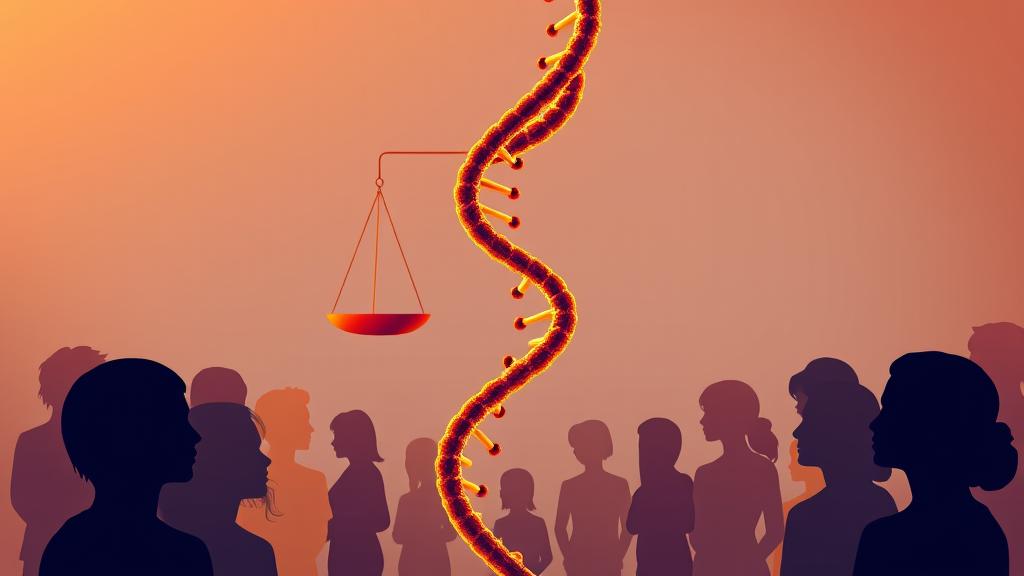
Introduction: The Promise and the Peril Precision medicine promised to treat each patient as an individual — to move beyond one-size-fits-all therapies to interventions tailored to your unique biology. AI-driven omics seemed poised to accelerate this vision: algorithms that could read your genome, interpret your proteome, and predict your disease risk with unprecedented accuracy. But there’s a problem. The data powering these algorithms is profoundly unrepresentative of human diversity. As of 2024, over 94% of participants in genome-wide association studies (GWAS) are of European ancestry, despite Europeans comprising only about 16% of the global population. This imbalance isn’t just a statistical curiosity — it has real consequences. Polygenic risk scores trained on European data perform significantly worse for individuals of African, Asian, Hispanic, and Indigenous ancestry. Variant classification algorithms misclassify pathogenic mutations in underrepresented populations. And the AI tools now entering clinical practice risk cementing these disparities into healthcare systems worldwide. ...

March 16, 2026 · 67 AI Lab
Clinical translation of omics AI to patient outcomes

Clinical Translation: From Omics AI to Patient Outcomes

The Ultimate Test: Does It Help Patients? After eighteen posts exploring the technical landscape of agentic omics—from foundation models for DNA and proteins to multi-agent systems for drug discovery—we arrive at the question that matters most: does any of this actually improve patient outcomes? The answer is more nuanced than the hype suggests. As of early 2026, the FDA has approved over 1,000 AI/ML-enabled medical devices, but only a small fraction operate on genomic or pathology data with demonstrated clinical utility (IntuitionLabs, 2025; Nature Digital Medicine, 2025). The gap between a model that achieves 95% accuracy on a benchmark and a tool that measurably extends survival remains wide—and crossing it requires navigating regulatory pathways, clinical validation studies, and the messy reality of healthcare IT infrastructure. ...

March 15, 2026 · 67 AI Lab
Multi-agent AI systems collaborating on biological research

Multi-Agent Systems for Biology: Collaborative AI Teams

Introduction No single AI agent can master all of biology. A genomics specialist doesn’t reason like a proteomics expert. A literature review agent has different skills from an experimental design agent. Yet biological discovery demands all of these perspectives working together. This is the promise of multi-agent systems for biology: collaborative AI teams where specialized agents debate, coordinate, and peer-review each other’s work — mimicking the collaborative nature of real scientific teams. ...

March 14, 2026 · 67 AI Lab
AI agents analyzing cancer genomics data

Agents for Cancer Genomics: Toward Autonomous Precision Oncology

Introduction: The Precision Oncology Imperative Cancer is not one disease but hundreds—each with distinct molecular drivers, treatment responses, and clinical trajectories. The promise of precision oncology is simple in concept but staggering in execution: match the right treatment to the right patient at the right time, guided by the molecular profile of their tumor. In practice, this requires orchestrating a complex workflow: tumor sequencing to identify mutations, interpretation of those variants against clinical databases, integration of genomic data with transcriptomic and proteomic profiles, therapy matching against drug databases, clinical trial matching, and longitudinal monitoring for resistance and recurrence. Each step generates data, requires expert interpretation, and carries uncertainty. ...

March 13, 2026 · 67 AI Lab
AI agents for drug discovery pipeline

Agents for Drug Discovery: From Target to Molecule

Agents for Drug Discovery: From Target to Molecule The pharmaceutical industry faces a productivity crisis. Developing a new drug costs an average of $2.3 billion and takes 10-15 years, with over 90% of candidates failing in clinical trials. Traditional drug discovery is a sequential, labor-intensive process: identify a target, validate it, screen millions of compounds, optimize leads, test safety, run clinical trials. Each stage can take years. Agentic AI — autonomous systems that reason, plan, and execute multi-step workflows — promises to compress this timeline dramatically. By orchestrating domain-specific models (AlphaFold for structure, ESM for protein embeddings, generative models for molecule design) with LLM reasoning, agents can automate the entire pipeline from target identification to clinical candidate selection. ...

March 12, 2026 · 67 AI Lab