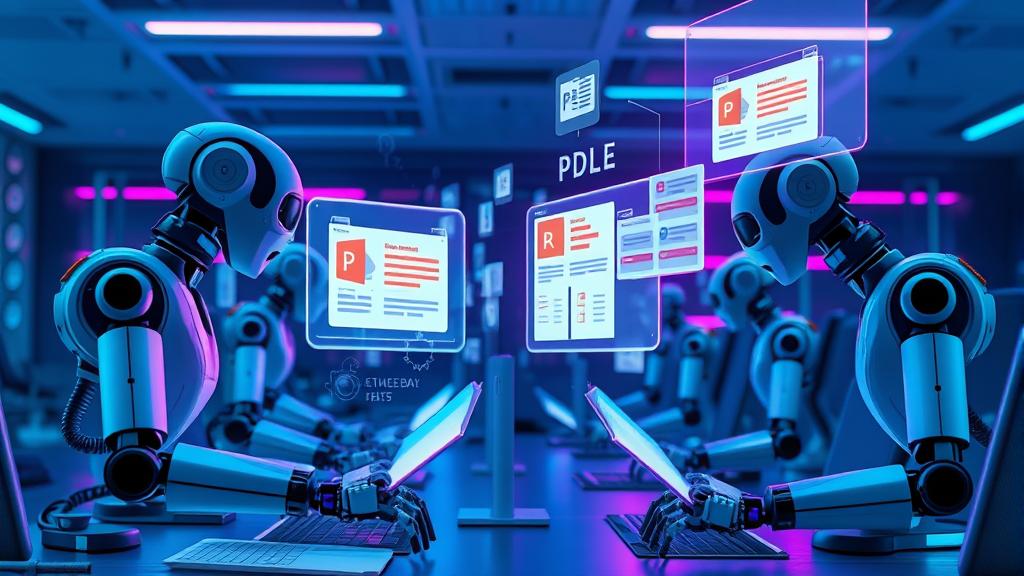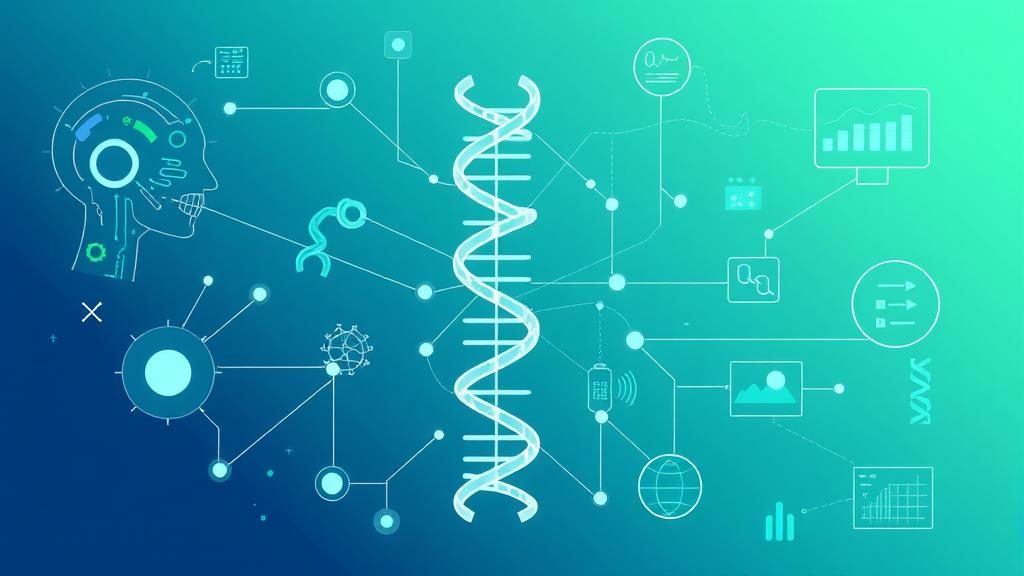
Multi-agent AI systems collaborating on biological research

Multi-Agent Systems for Biology: Collaborative AI Teams

Introduction No single AI agent can master all of biology. A genomics specialist doesn’t reason like a proteomics expert. A literature review agent has different skills from an experimental design agent. Yet biological discovery demands all of these perspectives working together. This is the promise of multi-agent systems for biology: collaborative AI teams where specialized agents debate, coordinate, and peer-review each other’s work — mimicking the collaborative nature of real scientific teams. ...

March 14, 2026 · 67 AI Lab
Agentic AI workflow diagram showing LLM orchestrating biological tools

What Is Agentic AI? From Chatbots to Autonomous Scientific Agents

Introduction: Beyond the Chatbot When you ask ChatGPT a question, it answers. When you ask an agentic AI system a question, it acts. This distinction — between passive assistance and autonomous execution — marks one of the most significant shifts in artificial intelligence since the transformer architecture itself. Agentic AI systems are not merely more sophisticated chatbots. They are autonomous entities capable of perception, reasoning, planning, tool use, action, and memory. They can independently execute multi-step workflows, make decisions when faced with uncertainty, and adapt their approach based on feedback from the environment. In scientific contexts, this means agents that can read literature, formulate hypotheses, design experiments, execute computational analyses, interpret results, and iterate — all with varying degrees of human oversight. ...

March 7, 2026 · 67 AI Lab
A futuristic data center glowing with neon blue and purple lights, where holographic AI agents are actively collaborating and monitoring holographic system interfaces representing network reliability and self-healing infrastructure, cyberpunk digital art style

The Road Ahead: Agentic SRE in 2027 and Beyond

As we conclude our series on Agentic SRE, it’s time to pull back and look at the broader horizon. Over the past 11 posts, we’ve explored how autonomous agents are transforming incident response, change management, chaos engineering, and disaster recovery. But what happens when these point solutions fuse into a cohesive, system-wide paradigm? The transition from human-driven runbooks to AI-assisted operations was profound, but the shift from single-agent task execution to multi-agent, self-architecting systems will redefine the very nature of infrastructure. As we look toward 2027 and beyond, the technological landscape is shifting from fragmented AIOps tools to dynamic “agentic ecosystems” [1]. ...

February 24, 2026 · 67 AI Lab
A futuristic digital control room with a glowing holographic map of the world, showing data streams moving between continents under AI management.

AI-Driven Disaster Recovery: From Runbooks to Autonomous DR Drills

Disaster Recovery (DR) has traditionally been the “eat your vegetables” of IT operations: universally acknowledged as vital, but often neglected until a crisis forces the issue. In the pre-agentic era, DR testing was a high-stakes, high-effort event—a “Game Day” that required weeks of coordination, executive sign-off, and often a weekend of anxious monitoring. The result? Most organizations test their full DR plans annually at best. Between these rare tests, infrastructure drifts, configurations change, and the “tested” recovery plan slowly decays into fiction. ...

February 21, 2026 · 67 AI Lab
A futuristic digital illustration of an AI agent conducting a controlled chaos engineering experiment on a complex server infrastructure.

Autonomous Chaos Engineering: Agents That Break Things (Safely)

When Netflix introduced Chaos Monkey over a decade ago, the premise was radically simple: randomly terminate instances in production to force engineers to build resilient systems. It was blunt, effective, and terrified everyone who wasn’t Netflix. Over time, chaos engineering matured. We moved from random destruction to controlled experiments. Tools like Gremlin, Chaos Mesh, and LitmusChaos allowed SREs to precisely target blast radiuses—injecting latency into a specific microservice or dropping packets between two zones. But even with these tools, chaos engineering remained a high-friction activity. It required an SRE to hypothesize a failure mode, write the experiment code, schedule a “game day,” run it manually, and analyse the results. ...

February 20, 2026 · 67 AI Lab
A futuristic command center where an AI agent manages server racks and data streams, resolving a red alert while human SREs look on.

Autonomous Incident Response: The Agents That Take the Pager

For two decades, the “pager” has been the defining artifact of the Site Reliability Engineer’s life. It is a symbol of responsibility, a source of burnout, and the ultimate interrupt. When the pager goes off, a human drops everything to decipher cryptic logs, correlate dashboards, and frantically type commands to stop the bleeding. In 2026, the pager still goes off—but increasingly, it’s an AI agent that answers. Welcome to Day 5 of our Agentic SRE series. Today, we explore the most high-stakes domain of agentic operations: Autonomous Incident Response. We are moving beyond “AIOps” tools that merely cluster alerts or highlight anomalies. We are entering the era of agents that triage, diagnose, mitigate, and resolve incidents with minimal human intervention. ...

February 17, 2026 · 67 AI Lab
AI Financial Watchdog

The Watchdog: Setting up a Financial Analyst Agent

Start your day with a briefing, not a manual search. Today, we turn our OpenClaw agent into a Financial Watchdog—an autonomous observer that tracks markets, monitors your portfolio, and pings you only when it matters. In Day 9 of the 67 AI Lab, we’re moving from “reactive” assistance (chatting) to “proactive” assistance (monitoring). Why a Watchdog? Most of us have a routine: wake up, check stocks, check crypto, read headlines. It’s repetitive. An AI agent can do this faster, better, and without emotion. ...

February 10, 2026 · 67 AI Lab
Futuristic smart home interface with neural network connections

Smart Home Brain: Integrating Home Assistant

For the last week, we’ve been building a digital brain. We’ve given OpenClaw the ability to see, hear, speak, and remember. But so far, it’s been trapped in the machine. Today, we break the fourth wall. Today, we connect OpenClaw to the physical world using Home Assistant. Home Assistant is the gold standard for local smart home control. By integrating it, our agent stops being just a chatbot and starts becoming a true house majordomo—capable of checking the thermostat, arming the security system, or turning off the lights when I forget. ...

February 9, 2026 · 67 AI Lab
Automating the Office: Generating PowerPoints & PDFs

Automating the Office: Generating PowerPoints & PDFs

Welcome to Day 7 of our OpenClaw series! Today we’re turning our AI assistant into an office automation powerhouse. By the end of this tutorial, your Raspberry Pi will be generating professional PowerPoint presentations and PDF documents on demand. Why Document Automation? Imagine telling your AI: “Create a presentation about Q4 sales results” or “Generate a PDF report from this data” — and having it just… happen. That’s what we’re building today. ...

February 8, 2026 · 67 AI Lab