Clinical translation of omics AI to patient outcomes

Clinical Translation: From Omics AI to Patient Outcomes

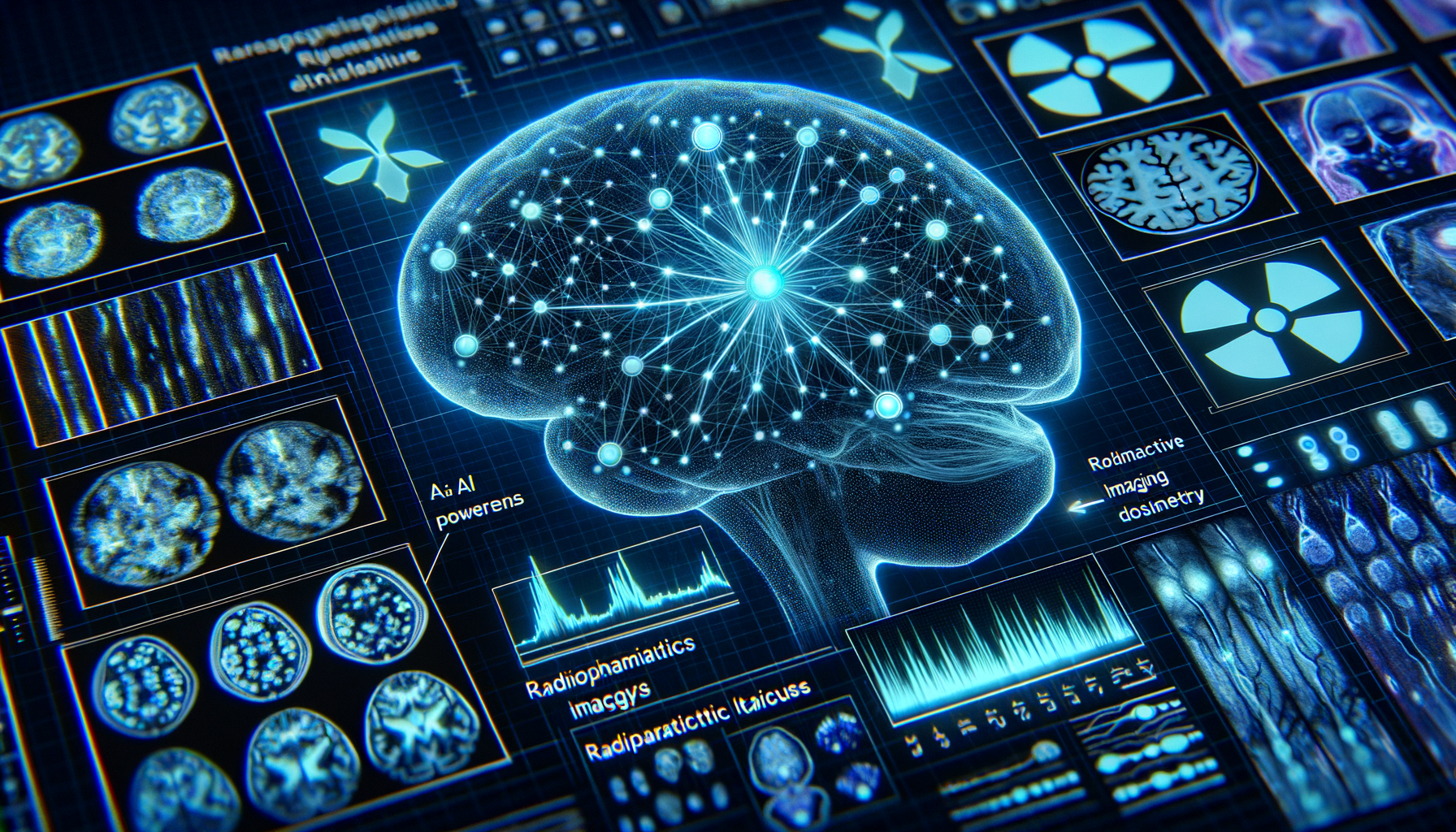
The Ultimate Test: Does It Help Patients? After eighteen posts exploring the technical landscape of agentic omics—from foundation models for DNA and proteins to multi-agent systems for drug discovery—we arrive at the question that matters most: does any of this actually improve patient outcomes? The answer is more nuanced than the hype suggests. As of early 2026, the FDA has approved over 1,000 AI/ML-enabled medical devices, but only a small fraction operate on genomic or pathology data with demonstrated clinical utility (IntuitionLabs, 2025; Nature Digital Medicine, 2025). The gap between a model that achieves 95% accuracy on a benchmark and a tool that measurably extends survival remains wide—and crossing it requires navigating regulatory pathways, clinical validation studies, and the messy reality of healthcare IT infrastructure. ...

March 15, 2026 · 67 AI Lab
Multi-agent AI systems collaborating on biological research

Multi-Agent Systems for Biology: Collaborative AI Teams

Introduction No single AI agent can master all of biology. A genomics specialist doesn’t reason like a proteomics expert. A literature review agent has different skills from an experimental design agent. Yet biological discovery demands all of these perspectives working together. This is the promise of multi-agent systems for biology: collaborative AI teams where specialized agents debate, coordinate, and peer-review each other’s work — mimicking the collaborative nature of real scientific teams. ...

March 14, 2026 · 67 AI Lab
AI agents analyzing cancer genomics data

Agents for Cancer Genomics: Toward Autonomous Precision Oncology

Introduction: The Precision Oncology Imperative Cancer is not one disease but hundreds—each with distinct molecular drivers, treatment responses, and clinical trajectories. The promise of precision oncology is simple in concept but staggering in execution: match the right treatment to the right patient at the right time, guided by the molecular profile of their tumor. In practice, this requires orchestrating a complex workflow: tumor sequencing to identify mutations, interpretation of those variants against clinical databases, integration of genomic data with transcriptomic and proteomic profiles, therapy matching against drug databases, clinical trial matching, and longitudinal monitoring for resistance and recurrence. Each step generates data, requires expert interpretation, and carries uncertainty. ...

March 13, 2026 · 67 AI Lab
AI agents for drug discovery pipeline

Agents for Drug Discovery: From Target to Molecule

Agents for Drug Discovery: From Target to Molecule The pharmaceutical industry faces a productivity crisis. Developing a new drug costs an average of $2.3 billion and takes 10-15 years, with over 90% of candidates failing in clinical trials. Traditional drug discovery is a sequential, labor-intensive process: identify a target, validate it, screen millions of compounds, optimize leads, test safety, run clinical trials. Each stage can take years. Agentic AI — autonomous systems that reason, plan, and execute multi-step workflows — promises to compress this timeline dramatically. By orchestrating domain-specific models (AlphaFold for structure, ESM for protein embeddings, generative models for molecule design) with LLM reasoning, agents can automate the entire pipeline from target identification to clinical candidate selection. ...

March 12, 2026 · 67 AI Lab
Building biological tool-use agents

Building Biological Tool-Use Agents: Architecture and Patterns

Building Biological Tool-Use Agents: Architecture and Patterns The vision of agentic omics — autonomous AI systems that orchestrate biological discovery — depends on a deceptively simple capability: tool use. An agent that can reason about biology but cannot access BLAST, AlphaFold, or single-cell analysis pipelines is like a biologist who understands theory but has never touched a pipette. This post provides a practical architecture for building biological tool-use agents. We cover the essential tool inventory, the unique error-handling challenges of biological data, prompt engineering patterns for biological reasoning, and a reference architecture based on the ReAct (Reason + Act) loop. This is the “how-to” companion to Post 13’s conceptual overview and Post 14’s vision of agentic omics. ...

March 11, 2026 · 67 AI Lab
Agentic Omics architecture showing LLM orchestrating domain-specific biological AI models

The Agentic Omics Vision: LLMs Meet Domain-Specific AI

Introduction: The Convergence Point In Post 13, we defined agentic AI as systems that autonomously plan, reason, use tools, and execute multi-step scientific workflows. Now we arrive at the central thesis of this entire series: Agentic Omics — the convergence of large language model (LLM) reasoning with domain-specific biological AI models like AlphaFold, ESM, scGPT, and DNABERT to create autonomous systems capable of end-to-end biological discovery. This is not science fiction. As of early 2026, agentic systems are being deployed in operational drug discovery settings at companies like AstraZeneca, with documented implementations compressing workflows that once took months into hours while maintaining scientific traceability (Seal et al., 2025). The question is no longer if this convergence will transform biology, but how — and what architecture will get us there most reliably. ...

March 10, 2026 · 67 AI Lab
Agentic AI workflow diagram showing LLM orchestrating biological tools

What Is Agentic AI? From Chatbots to Autonomous Scientific Agents

Introduction: Beyond the Chatbot When you ask ChatGPT a question, it answers. When you ask an agentic AI system a question, it acts. This distinction — between passive assistance and autonomous execution — marks one of the most significant shifts in artificial intelligence since the transformer architecture itself. Agentic AI systems are not merely more sophisticated chatbots. They are autonomous entities capable of perception, reasoning, planning, tool use, action, and memory. They can independently execute multi-step workflows, make decisions when faced with uncertainty, and adapt their approach based on feedback from the environment. In scientific contexts, this means agents that can read literature, formulate hypotheses, design experiments, execute computational analyses, interpret results, and iterate — all with varying degrees of human oversight. ...

March 7, 2026 · 67 AI Lab
Single-cell multi-omics visualization with DNA, RNA, and protein layers

Single-Cell Multi-Omics: The Cellular Resolution Revolution

Introduction: The Cellular Resolution Frontier Biology has always been a story of scale. For decades, we studied organisms, then tissues, then cell populations — averaging signals across thousands or millions of cells. But tissues are not homogeneous. A tumor contains cancer cells, immune cells, fibroblasts, and endothelial cells, each with distinct molecular profiles. The brain contains hundreds of neuronal subtypes, each with unique functions. Even “identical” cells in culture exhibit stochastic variation in gene expression that can determine cell fate. ...

March 6, 2026 · 67 AI Lab
Abstract visualization of the divergence between scientific research and software development

The Science Paradox: Why Society Pays for Apps, Not Cures

Imagine two friends. One is a computational biologist, spending their days deciphering the human genome, designing complex experiments, and navigating the physical limitations of the natural world to find a cure for a rare disease. The other is a tech lead at a major software company, designing the architecture for a new feature on a widely used app. The biologist works longer hours, required a decade of post-graduate education to get their job, and arguably contributes more to the long-term survival of humanity. Yet, the software engineer earns three times their salary. Why? ...

March 6, 2026 · 67 AI Lab

AI for Phenomics: When Images Meet Molecules

The Visible Layer of Biology While genomics reads the book of life and proteomics predicts the machinery that executes it, phenomics observes the actual outcome—the visible traits, cellular morphologies, and clinical presentations that emerge from the interplay of genes, environment, and chance. It is the layer we can see, measure, and often directly connect to disease. Yet phenomics has historically been the poor cousin of molecular omics. High-throughput sequencing transformed genomics and transcriptomics into data-rich disciplines, while phenotyping remained labor-intensive, subjective, and low-throughput. A pathologist examining tissue slides. A physician recording clinical observations. A biologist peering through a microscope. ...

March 5, 2026 · 67 AI Lab