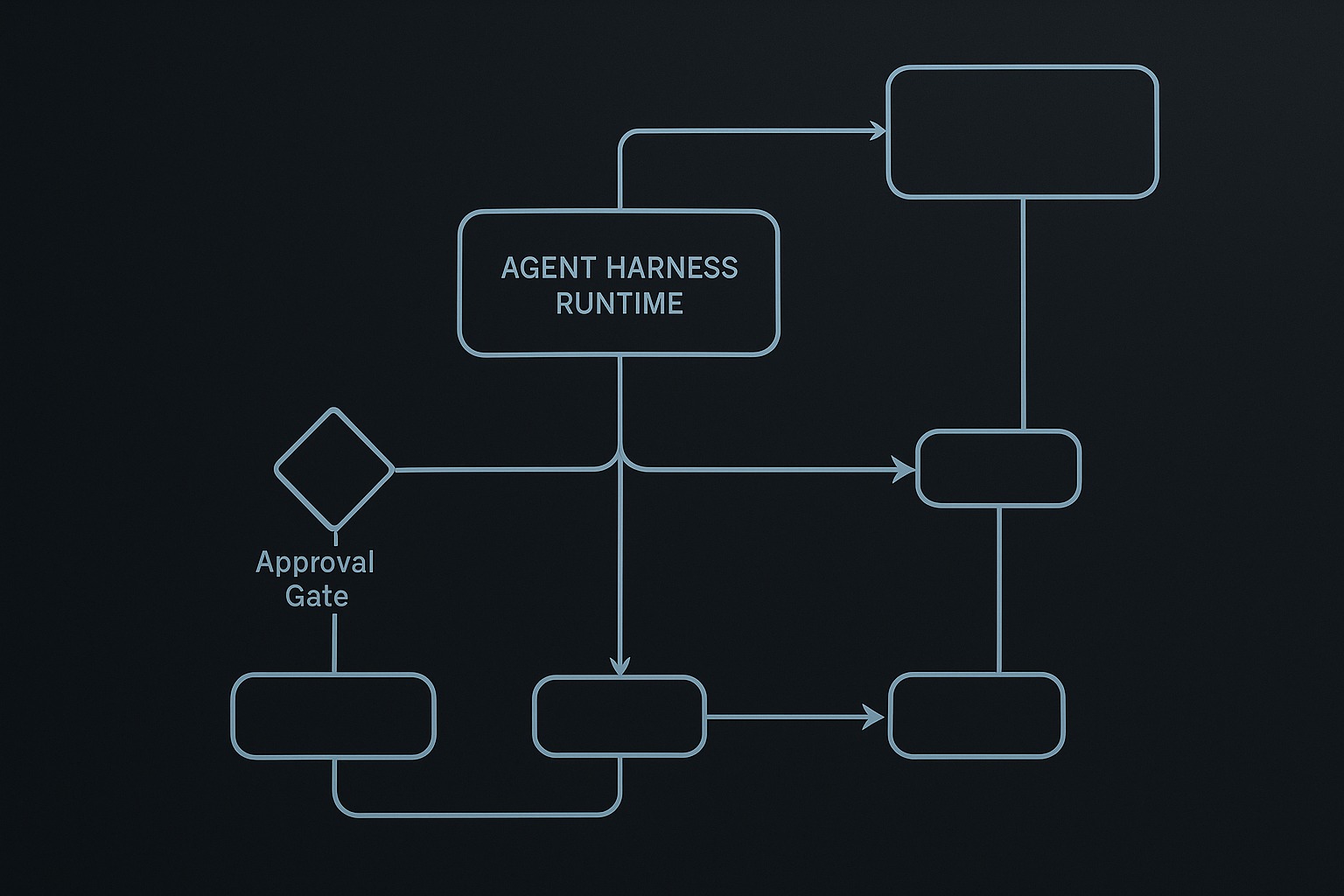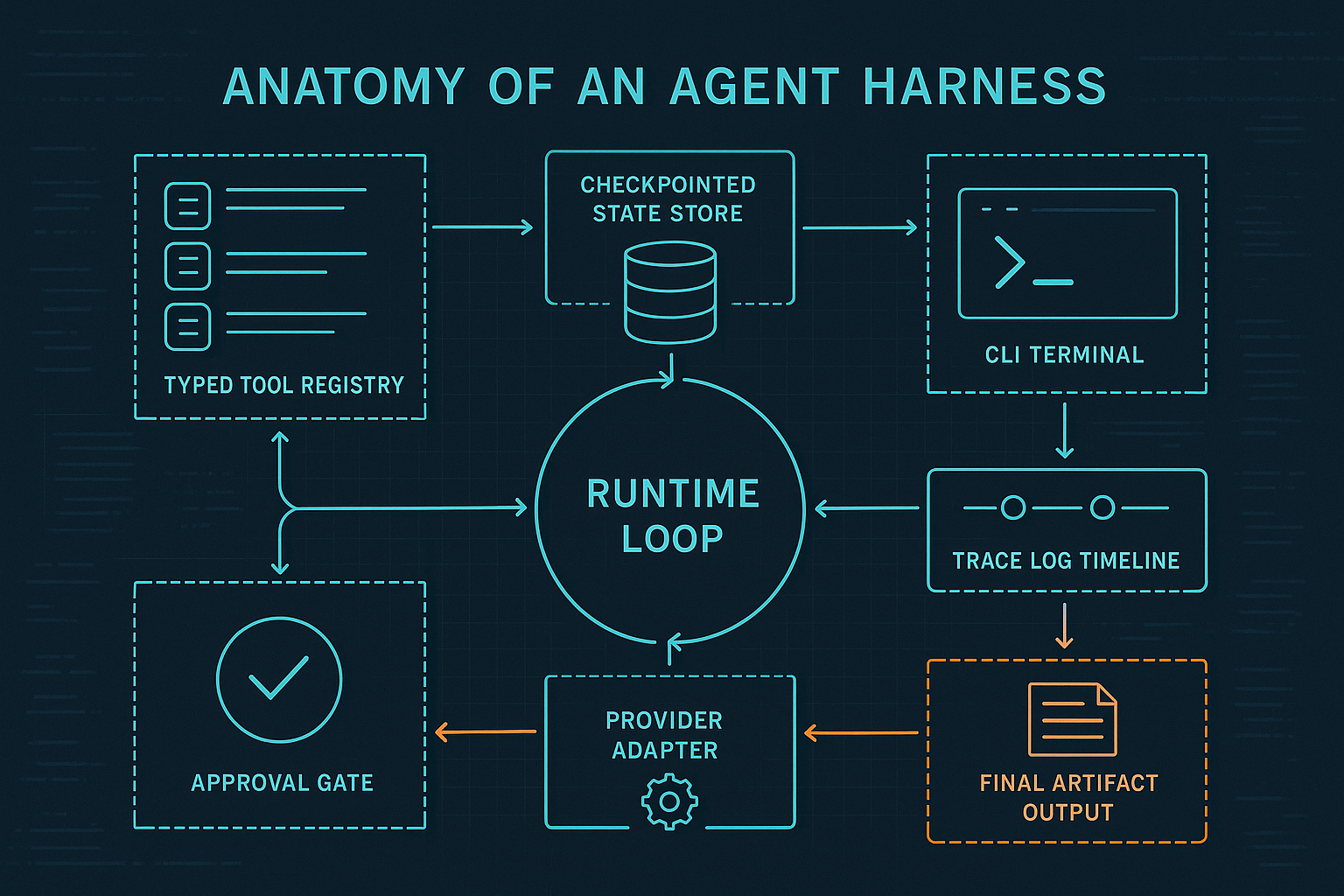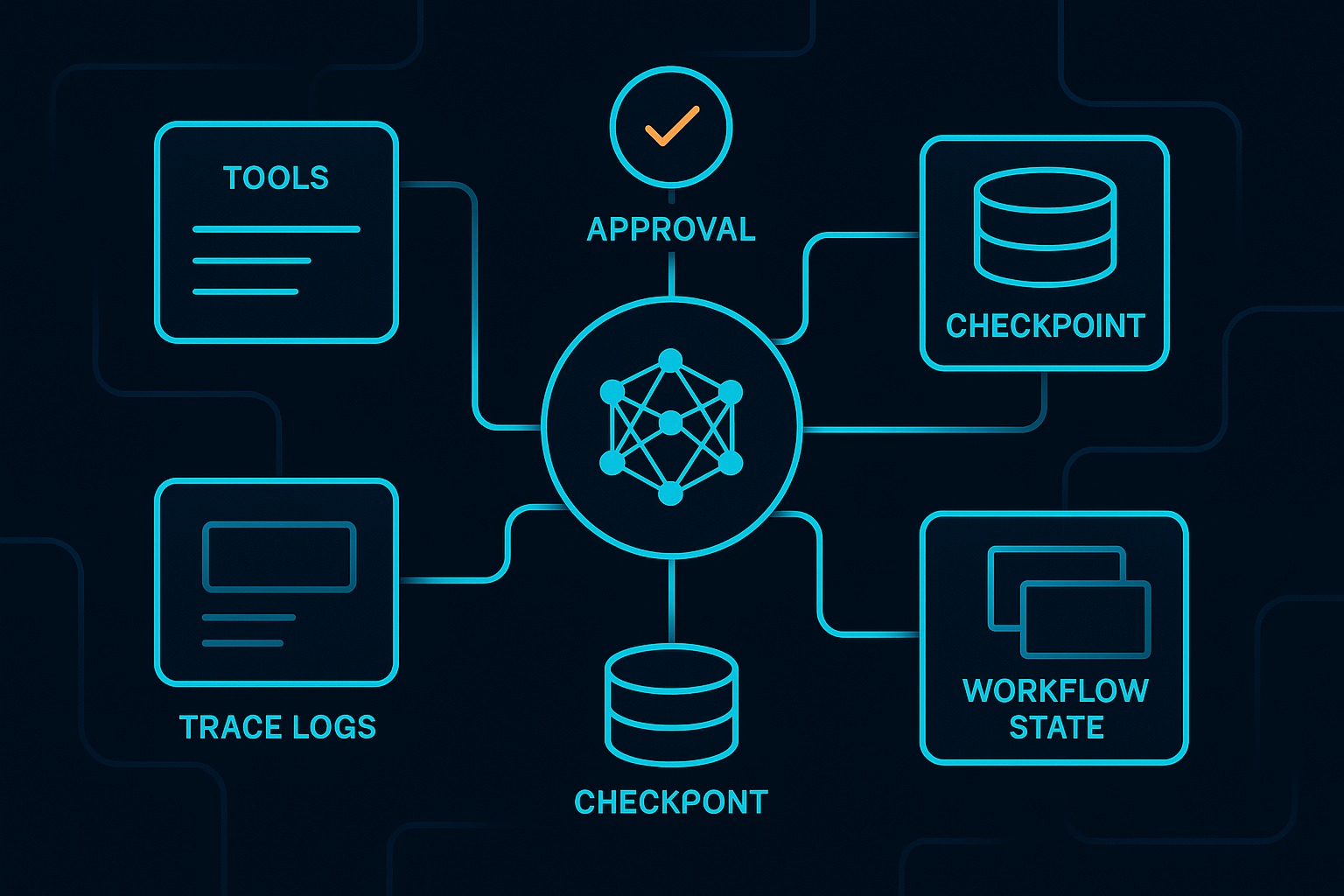
Abstract diagram of an LLM connected to tools, checkpoints, approval gates, and trace logs

Why Agentic Harness Engineering Matters More Than Prompt Engineering

The live demo repo for this series is 67ailab/harness-engineering. This first post is grounded in the current public repo state rather than a made-up architecture diagram. For this article, I did not add a new repo feature before publishing; the existing baseline already supports the core claim. At the time of writing, that baseline includes typed tools, checkpointed run state, resumable execution, an approval gate before writing artifacts, per-step traces, a planner/reviewer split, and optional local OpenAI-compatible model support. ...

April 30, 2026 · 67 AI Lab
Abstract market dashboard with cloud growth, AI infrastructure, and earnings signals

Big Tech Earnings Show the New AI Trade: Monetization Wins, Spend Alone Does Not

The latest earnings reports from Microsoft, Alphabet, Amazon, and Meta delivered one very clear message: the market is no longer rewarding AI investment on faith alone. Investors still believe in the AI buildout. If anything, these results reinforced that hyperscaler spending on compute, models, networking, and power is very real. But the market has become much more selective about which AI stories it rewards. The dividing line is no longer “who is spending the most.” It is now much closer to: who can prove that AI demand is already turning into durable revenue, cloud growth, backlog, and operating leverage. ...

April 30, 2026 · 67 AI Lab
Abstract diagram of control planes, services, and cascading failure paths in a hyper-scale distributed system

A Comprehensive Guideline for Extreme Risk Identification and Prevention for Hyper-scale Distributed Systems

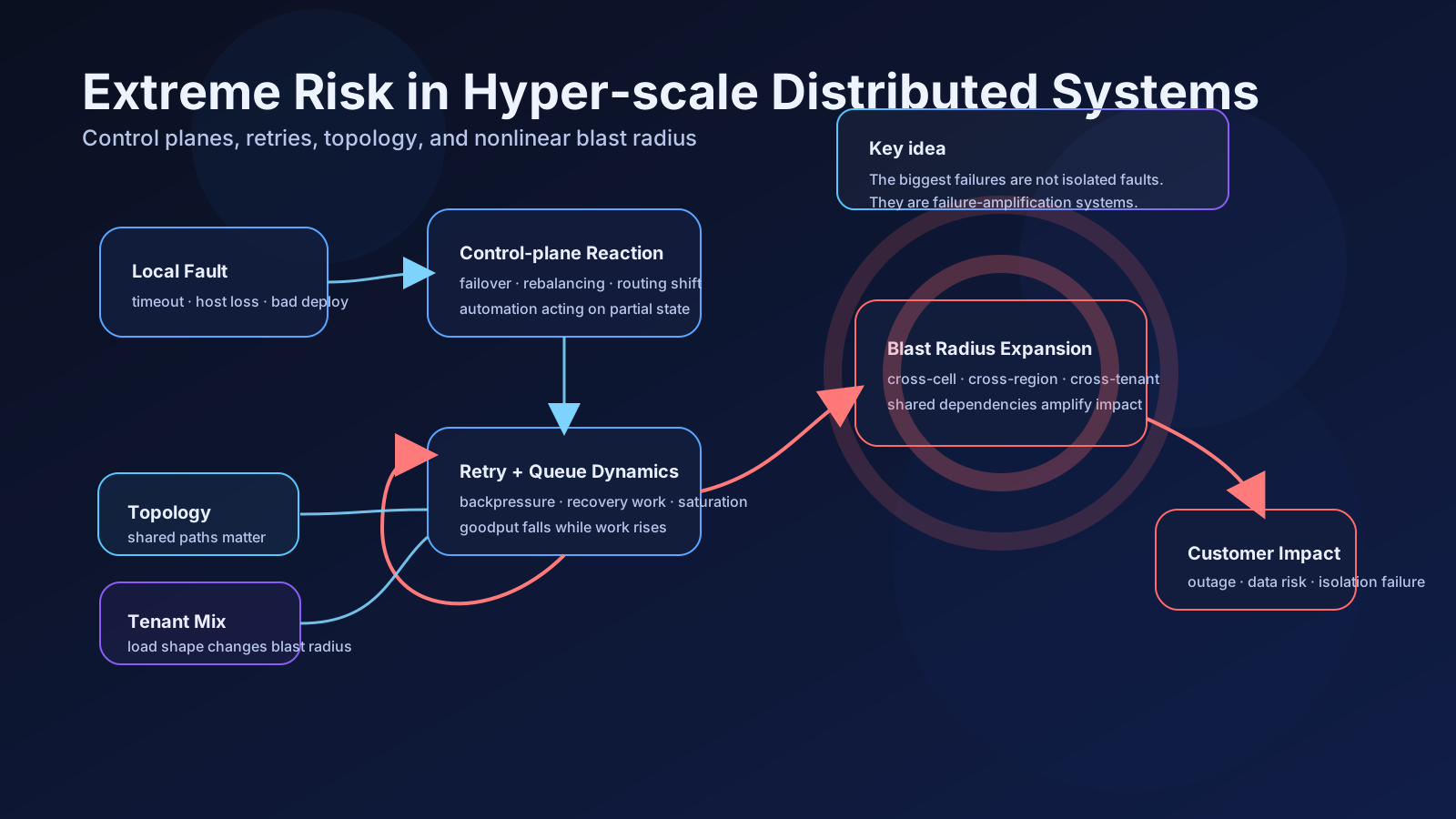
Hyper-scale distributed systems fail differently from ordinary software systems. Their most dangerous risks are rarely caused by one broken component. They emerge from the interaction of control planes, data planes, deployment automation, network topology, retry behavior, queueing dynamics, tenant workloads, and human operational decisions. In such systems, extreme risk means a low-frequency but high-consequence condition that can create nonlinear blast radius: regional degradation, global control-plane unavailability, cross-tenant impact, silent data corruption, large-scale isolation failure, or unrecoverable operational deadlock. ...

April 28, 2026 · 67 AI Lab
Abstract illustration of distributed systems, AI infrastructure, networking, storage, and accelerators

EuroSys 2026: Where Systems Research Is Heading

EuroSys has always been a good place to see where real systems pressure is building. The 2026 edition is especially revealing. The accepted-paper list shows a community that is no longer just building generic distributed systems abstractions. It is increasingly shaped by AI-scale workloads, accelerators, network bottlenecks, cloud efficiency, and production-grade reliability constraints. This report synthesizes the EuroSys 2026 accepted papers into a high-level map of the field: the key areas covered by the conference, the most popular areas, the major trends visible across the program, and the follow-up deep dives worth turning into a full post series. Methodology and scope This report is grounded in the EuroSys 2026 accepted papers list and the linked proceedings entry: ...

April 26, 2026 · 67 AI Lab
Layered multi-omics data streams converging into an integrated biological model

Multi-Omics Integration: The Whole Is Greater Than the Sum

Introduction: Biology Does Not Happen One Modality at a Time If genomics gives us the blueprint, transcriptomics shows what is being transcribed, proteomics shows what machinery is actually present, and metabolomics shows the biochemical consequences, then a single-omics analysis is always partial by construction. That is not a flaw in any one assay; it is a fact about biology. Cells regulate themselves through layered, noisy, nonlinear interactions. A DNA mutation may have no phenotypic consequence if the transcript is silenced. A dramatic RNA change may not matter if protein abundance is buffered. A protein-level perturbation may only become visible when a pathway rewires metabolism. ...

April 26, 2026 · 67 AI Lab
Futuristic illustration of a mid-size AI model architecture with layered neural blocks and efficient attention pathways

Qwen3.6-27B Deep Dive: Why This Mid-Size Dense Model Works So Well

Qwen3.6-27B is one of the most interesting open models released this year—not because it is the biggest, but because it makes a strong case that mid-size dense models are now good enough to challenge much larger systems when the architecture, post-training, and inference strategy are designed well. That matters. The industry has spent years obsessing over parameter count, but developers do not deploy parameter counts. They deploy systems that need to be accurate, fast, stable, affordable, and easy to serve. Qwen3.6-27B lands right in that sweet spot. ...

April 23, 2026 · 67 AI Lab
Visualization showing the evolution from large inefficient LLMs to smaller, more efficient models

The LLM Efficiency Revolution: How 8B Models Now Outperform 70B Giants

We are witnessing a massive paradigm shift in large language model development. A couple of years ago, the primary strategy to make an LLM smarter was simply to throw more parameters and raw compute at it. Today, models in the 7B to 8B parameter range easily outperform the 70B+ models of the past. This leap in “weight efficiency” isn’t happening by accident or mere trial and error. It is driven by highly deliberate, scientifically grounded methodologies across the entire training pipeline. ...

April 16, 2026 · 67 AI Lab
DNA helix with neural network overlay representing AI decoding gene regulatory grammar

Decoding Gene Promoters: AI Cracks the Regulatory Grammar of Human DNA

Research Date: 2026-04-05 Category: AI-Genomics-Gene-Regulation Focus: PARM deep learning model for predicting and designing promoter activity The Bottom Line (TL;DR) Scientists just built an AI that can read and write the “grammar” of gene promoters—the DNA switches that control when and where genes turn on. The model, called PARM (Promoter Activity Regulatory Model), can: ✅ Predict how active a promoter will be in different cell types—just from its DNA sequence ✅ Design custom promoters that work as well as natural ones ✅ Reveal the hidden “rules” of gene regulation that were mysterious for decades Why it matters: This is a major step toward programmable gene expression—think precision gene therapies that activate only in the right cells, or regenerative medicine where we can control exactly which genes turn on during tissue repair. ...

April 5, 2026 · 67 AI Lab
AWS data center infrastructure with security and defense systems

AWS Middle East Data Center Attacks: Strategic Analysis and Lessons Learned

AWS Middle East Data Center Attacks: Strategic Analysis and Lessons Learned Date: April 5, 2026 Author: Cloud Infrastructure Security Team Classification: Public Technical Insight Executive Summary In March-April 2026, Amazon Web Services (AWS) experienced unprecedented kinetic attacks on its Middle East data center infrastructure, marking the first documented wartime strikes against major hyperscaler facilities. Iranian Shahed-136 drones and ballistic missiles targeted AWS regions ME-CENTRAL-1 (United Arab Emirates) and ME-SOUTH-1 (Bahrain), causing structural damage, service disruptions, and forcing a fundamental reevaluation of cloud infrastructure resilience assumptions. ...

April 5, 2026 · 67 AI Lab
Scientific visualization of AI-powered theranostics and radiopharmaceutical dosimetry with neural network patterns

AI in Radiobiology & Radiopharmaceuticals: April 2026 Update

AI in Radiobiology & Radiopharmaceuticals: April 2026 Update Research Date: 2026-04-04 Category: AI-Radiobiology-Radiopharmaceutical Focus: AI-driven theranostics dosimetry, precision radiotherapy frameworks, and radiopharmaceutical discovery advances 1. AI-Enhanced Theranostics Dosimetry: Comprehensive 2025 Review A systematic review in Nuclear Medicine and Molecular Imaging (August 2025) examined deep learning applications in theranostic radiopharmaceutical dosimetry across three critical domains: image quality enhancement, dose estimation, and organ segmentation [1]. Deep Learning Architectures U-Net-based models: Primary architecture for organ segmentation, achieving Dice similarity coefficients >0.90 in benchmark challenges [1] Generative Adversarial Networks (GANs): Used for PET image synthesis and quality enhancement; Jyoti et al. achieved PSNR 32.83 and SSIM 77.48 for synthetic brain PET representing Alzheimer’s disease stages [1] Hybrid transformer networks: Emerging for multi-task dosimetry workflows combining segmentation and dose prediction [1] PET Image Synthesis Innovation Wang et al. demonstrated 3D U-Net synthesis of synaptic density (¹¹C-UCB-J) and amyloid deposition (¹¹C-PiB) PET from widely available ¹⁸F-FDG scans [1] Mean region-of-interest biases within ±2% across Alzheimer’s disease and cognitively normal groups [1] Applications: overcoming short-lived radionuclide imaging limitations, reducing radiation exposure, enabling delayed-time-point dosimetry without additional scans [1] Dosimetry Software Integrating AI QDOSE: Supports AI-based semi- and fully-automated organ segmentation, single time-point dosimetry, one-click hybrid dosimetry [1] MIM Software: Voxel-level dosimetry with AI-enhanced segmentation capabilities [1] VoxelDose, BigDose, RMDP: Additional voxel-based dosimetry packages incorporating ML components [1] Critical Challenges Identified Accurate dose estimation from theranostic pairs (diagnostic/therapeutic imaging correlation) [1] Lack of standardized imaging datasets for DL training [1] Radionuclide decay chain modeling complexity for multi-emitter isotopes [1] Need for optimization and standardization of AI models for clinical reliability [1] 2. Precision Radiotherapy Implementation Framework: Semantic AI Analysis A PMC-published study (2025) applied AI-driven semantic and temporal analysis to 3,343 unique articles (1964–2025) from Scopus, PubMed, and Web of Science, mapping radiotherapy-radiobiology-oncology evolution [2]. ...

April 5, 2026 · 67 AI Lab