Extreme Risk in Hyper-scale Distributed Systems: How to Detect It Before It Becomes an Outage
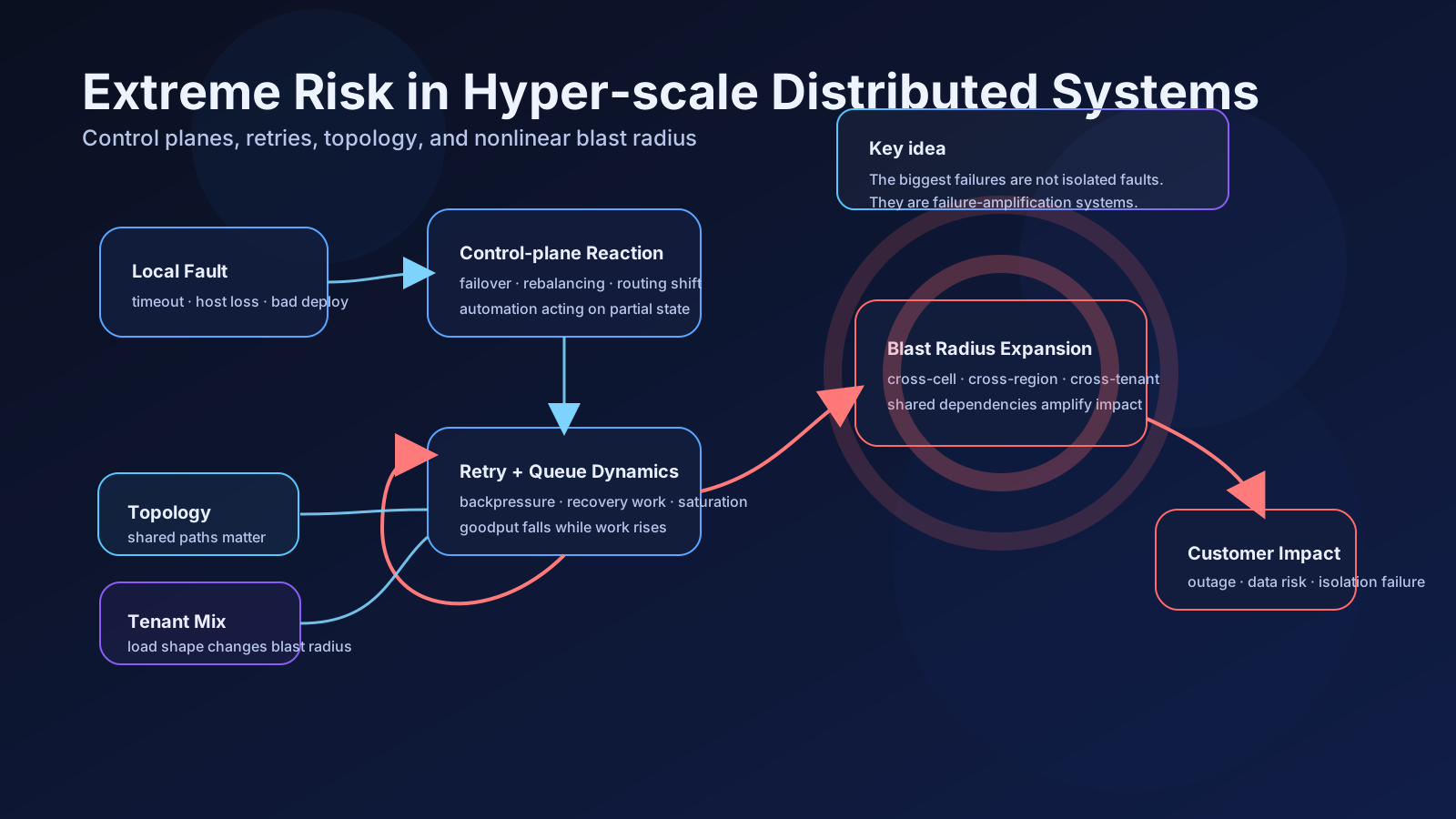
Hyper-scale distributed systems fail differently from ordinary software systems. Their most dangerous risks are rarely caused by one broken host, one bad API call, or one overloaded queue. The serious failures emerge from interactions: control-plane reactions, retry storms, deployment waves, topology quirks, tenant mix, backpressure behavior, recovery automation, and human operational decisions. That is what makes extreme risk different. In this context, extreme risk means a low-frequency but high-consequence condition that can create nonlinear blast radius: regional degradation, global control-plane unavailability, cross-tenant impact, silent data corruption, security isolation failure, metastable overload, or operational deadlock that is hard to unwind. ...