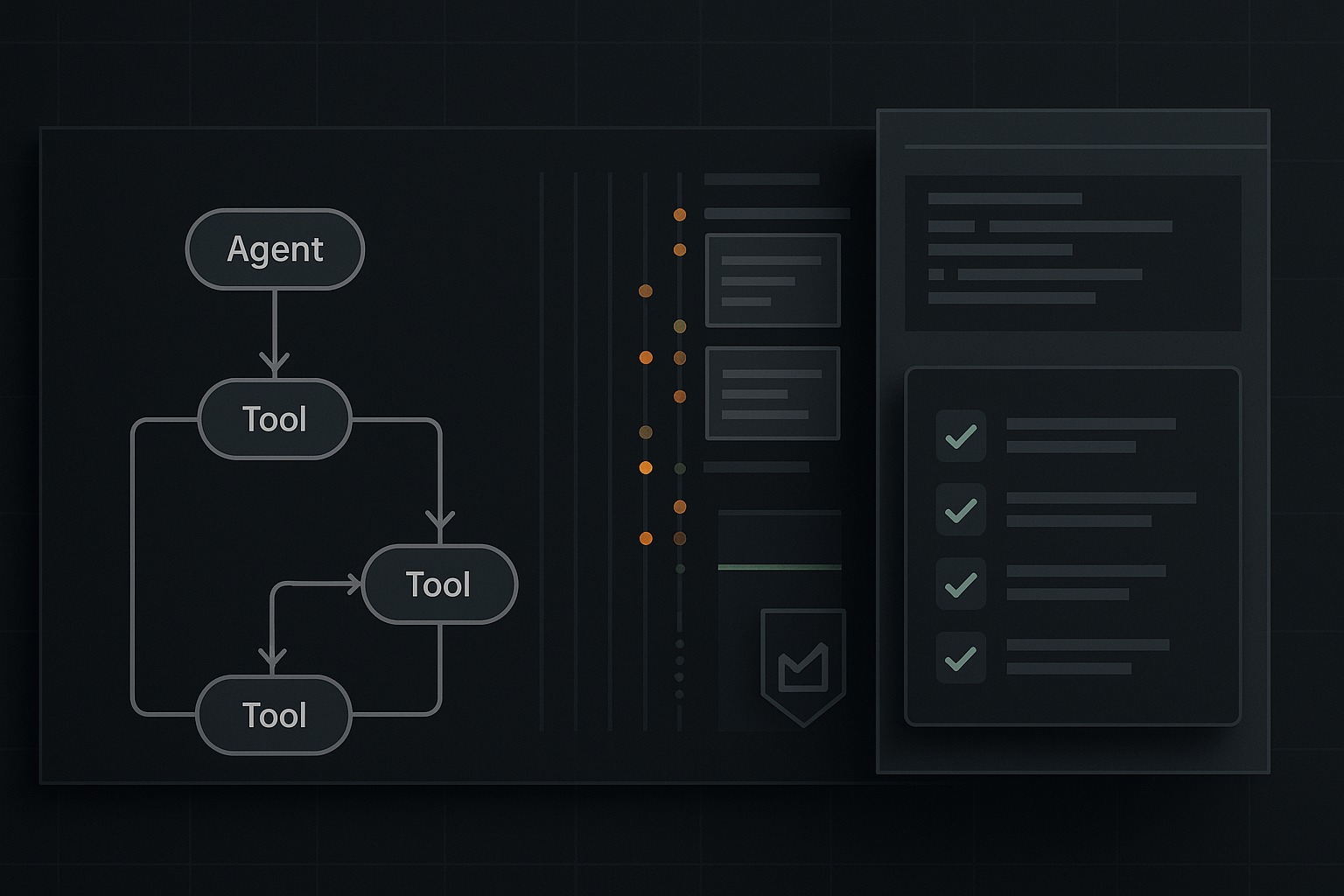
Technical illustration of an agent workflow feeding event traces into a compact observability panel and evaluation checklist

Tracing, Observability, and Evals for Agent Systems

The live demo repo for this series is 67ailab/harness-engineering, and for this post I did change the repo before publishing. The new capability shipped in commit 85c762c, which adds two concrete things the repo was missing: a persisted trace-summary surface for every run a lightweight eval runner with trace-aware fixtures The key changes are in src/harness_engineering/tracing.py, src/harness_engineering/store.py, src/harness_engineering/cli.py, and the new src/harness_engineering/evals.py module, plus starter fixtures in sample_data/evals/basic.json. That matters because a lot of agent writing still treats observability as an afterthought and evals as a benchmark spreadsheet. In practice, most production pain shows up somewhere else: ...

May 7, 2026 · 67 AI Lab
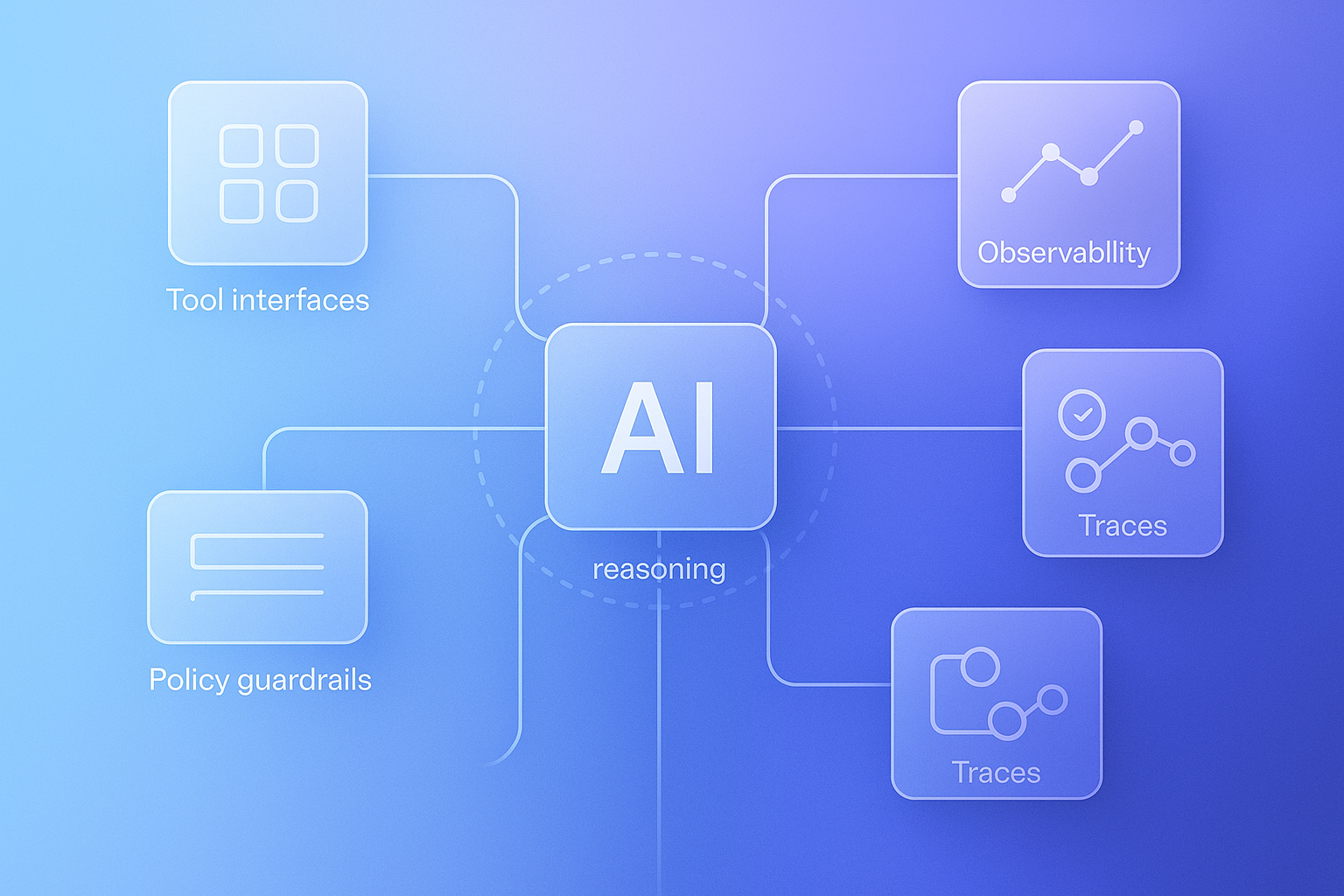
Systems diagram of an AI agent connected to tools, observability, approval gates, memory, and policy guardrails

Agentic Harness Engineering White Paper

Artificial intelligence is entering a new engineering phase. For the last two years, the dominant conversation centered on prompt engineering: how to ask better questions, structure better instructions, and squeeze more reliable output from large language models. That work mattered, and still matters. But as models have become capable of planning, tool use, coding, browsing, testing, and acting over many steps, the practical bottleneck has shifted. The central production problem is no longer simply how to prompt the model. It is how to build the runtime around the model so that the model can act effectively, safely, durably, and measurably. ...

May 1, 2026 · 67 AI Lab